

Search all blogs
Latest posts
-
 Guide to Green Polyester Tape10/09/2026Read more
Explore our Green Polyester Tape range for high temperature masking with 80 stocked sizes, 40 widths and 25 or 80...
-
 Conveyor Feet Guide: Types, Materials & Installation03/07/2026Read more
Everything you need to know about conveyor feet, types, load ratings, materials, installation steps and how...

Complete Guide to Threaded Rods
The Complete Guide to Threaded Rods and Studs
Threaded rods and threaded studs are versatile fastening components used to connect, support, suspend and adjust parts across construction, manufacturing, plumbing and electrical installations.
Available in nylon, A2 stainless steel and A4 stainless steel, they can be supplied in standard lengths or pre-cut to suit specific project requirements.
Available Options
- Nylon all thread
- Stainless steel threaded rod
- Pre-cut stainless steel threaded studs
- Standard and custom lengths
Threaded Rods at a Glance
A quick overview of their purpose, forms and common uses.
| Feature | What It Means | Typical Use |
|---|---|---|
| Fully Threaded Design | Thread runs along the full length of the rod or stud. | Adjustable connections, supports and assemblies. |
| Standard or Pre-Cut Lengths | Supplied in longer rod lengths or cut into shorter studs. | Site work, machinery, frames and made-to-size projects. |
| Multiple Materials | Available in nylon, steel, stainless steel and brass. | Indoor, outdoor, electrical, chemical and decorative uses. |
| Adjustable Fastening | Nuts and washers can be positioned along the thread. | Levelling, tensioning, suspension and structural support. |
Which Threaded Rods Do We Offer?
Choose from nylon all thread, full-length stainless steel rod and pre-cut threaded studs.
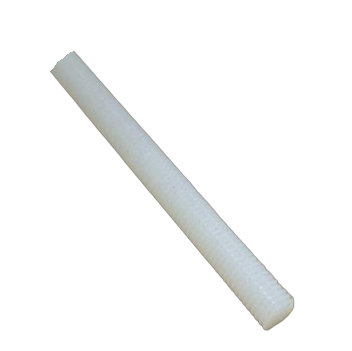
Nylon Threaded Rod
A lightweight and corrosion-resistant all-thread option manufactured to DIN 975.
View Nylon Threaded Rod_1.png)
Stainless Steel Threaded Rod
Heavy-duty, corrosion-resistant all thread manufactured to DIN 976-1.
View Threaded Rod_1.png)
Stainless Steel Threaded Studs
DIN 976-1 threaded studs supplied in standard cut lengths with custom sizes available.
View Threaded StudsCommon Threaded Rod Applications
Threaded rods are used to connect, support, suspend and adjust components.
| Application or Industry | How Threaded Rods Are Used | Key Benefit |
|---|---|---|
| Construction and Manufacturing | Connecting and supporting structural or machinery components. | Provides adjustable strength and support. |
| Plumbing | Supporting pipes and creating adjustable connections. | Allows position and tension to be adjusted. |
| Electrical Installations | Supporting equipment, suspension systems and selected grounding applications. | Provides repeatable alignment and secure support. |
| Frames and Fixtures | Building workbenches, shelving, supports and temporary structures. | Creates a modular and adjustable assembly. |
How Are Threaded Rods Used?
Their continuous thread makes them suitable for joining, supporting and adjustment.
Joining Materials
Threaded rod can join wood, metal, plastic and other materials using nuts and washers at each end.
Building Structures
Rods can form part of frames, supports, racks and scaffolding-style structures when combined with suitable fittings.
Adjusting Position
The threaded length allows height, angle, distance or tension to be adjusted using nuts, couplers or turnbuckles.
Why Choose Pre-Cut Threaded Studs?
Cutting threaded rod accurately requires suitable equipment and careful measurement. Pre-cut threaded studs remove this extra process and provide a ready-to-use length.
Vital Parts supplies stainless steel threaded rod in 1 metre lengths and standard threaded stud lengths from 1cm to 60cm, with custom lengths available for specialist requirements.
- Accurate finished length
- Reduced cutting time
- Cleaner project preparation
- Standard and custom options
Threaded Rod and Stud Range
Available thread sizes and materials from the current range.
| Type | Available Size | Material |
|---|---|---|
| Threaded Rod DIN 976-1 | M2–M52 | A2 and A4 stainless steel |
| Threaded Studs DIN 976-1 | M3–M20 | A2 and A4 stainless steel |
| Nylon All Thread | M4–M30 | Nylon |
What Are DIN Numbers?
DIN standards define dimensions, tolerances and other technical requirements.
| Standard | Thread Type | Summary |
|---|---|---|
| DIN 976-1 | Metric coarse pitch | Commonly used for general-purpose metric threaded rods and studs. |
| DIN 976-2 | Metric fine pitch | Used for applications requiring a fine thread and more precise adjustment. |
| DIN 975 | Continuous metric thread | Applied to fully threaded rod with a constant thread along its length. |
Threaded Rod Material Comparison
Choose the material according to strength, corrosion resistance, conductivity and environment.
| Material | Key Features | Typical Applications |
|---|---|---|
| Steel | High strength, durable and available with protective finishes. | General construction, machinery and structural support. |
| A2 Stainless Steel | Good corrosion resistance for many indoor and outdoor applications. | Manufacturing, equipment, general outdoor use and food-related environments. |
| A4 Stainless Steel | Higher corrosion resistance and often referred to as marine grade. | Marine, chemical and demanding external environments. |
| Nylon | Lightweight, non-corrosive, low-friction and non-metallic. | Electrical, chemical, textile and lightweight assemblies. |
| Brass | Corrosion-resistant, non-magnetic and electrically conductive. | Plumbing, furniture and decorative or specialist assemblies. |
Frequently Asked Questions About Threaded Rods
Common questions about sizing, cutting, materials and standards.
Need Help Choosing Threaded Rod?
Contact our sales team for help with thread size, material, DIN standard, standard lengths or custom cut threaded studs.
Related posts
-
 The Complete Guide to Wing nutsEverything you need to know about wing nuts: uses, types, and expert tips for every project.Read more
 -
 Guide to Hose Clamps: Types, Grades and Common ApplicationsDiscover materials, clamp types (W2–W5) and ideal uses from worm‑drive to T‑boltRead more
 -
 A Guide to Stainless Steel Levelling Feet: Heavy Duty Adjustable Solutions for UK IndustryEverything you need to know about selecting, measuring & installing levelling feet for equipment stabilityRead more
Leave a comment