

Search all blogs
Latest posts
-
 Guide to Green Polyester Tape10/09/2026Read more
Explore our Green Polyester Tape range for high temperature masking with 80 stocked sizes, 40 widths and 25 or 80...
-
 Conveyor Feet Guide: Types, Materials & Installation03/07/2026Read more
Everything you need to know about conveyor feet, types, load ratings, materials, installation steps and how...
The Complete Guide to Hexagonal Bolts and Hex Head Bolt Types
Hexagonal bolts, commonly known as hex head bolts, are amongst the most versatile and widely used fastener types in construction, automotive, and industrial applications. This comprehensive guide explores the various types of hex bolts, their applications, materials, and specifications to help you select the perfect fastening solution for your project.
Which Variants of Hex Head Bolts are Available?
There are numerous types of hex bolts available, each engineered for specific applications and load requirements. All hexagonal bolts feature a distinctive six-sided head that provides excellent grip and allows for high torque application using spanners or sockets. Here's our comprehensive breakdown of the most common hex head bolt types:
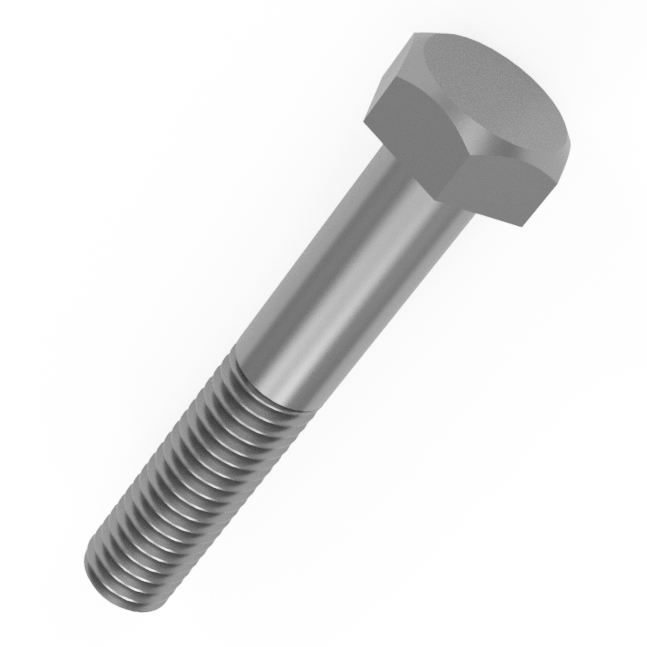
DIN 931 – Hex Head Bolts with Shank
DIN 931 bolts feature a standard hexagonal head and are part threaded, featuring a plain shank. We now stock these hex bolt types in enhanced 8.8 BZP (bright zinc plated) and 10.9 BZP material options for superior strength and corrosion resistance. For specialised applications, we also supply DIN 931 hexagon head bolts in premium materials including Bumax super-duplex stainless steel, titanium for aerospace applications, and brass for marine environments.
The plain shank design provides greater strength under lateral loads compared to fully threaded alternatives, making these fastener types ideal for structural applications where shear strength is critical.

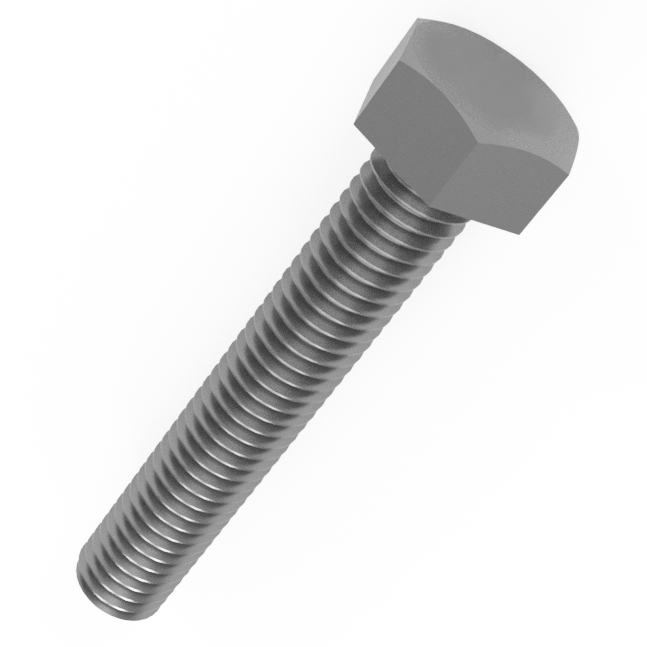
DIN 933 – Hex Head Bolts with Thread up to Head
DIN 933 bolts feature a standard hexagonal head and are fully threaded. Like our DIN 931 range, these hex bolt types are now available in 8.8 BZP and 10.9 BZP grades, as well as exotic materials such as Bumax super-duplex stainless steel, titanium for aerospace applications, and brass for marine environments.
The full threading allows for maximum adjustment and is ideal for applications where the bolt passes completely through the assembled parts, providing excellent holding power in through-hole applications.
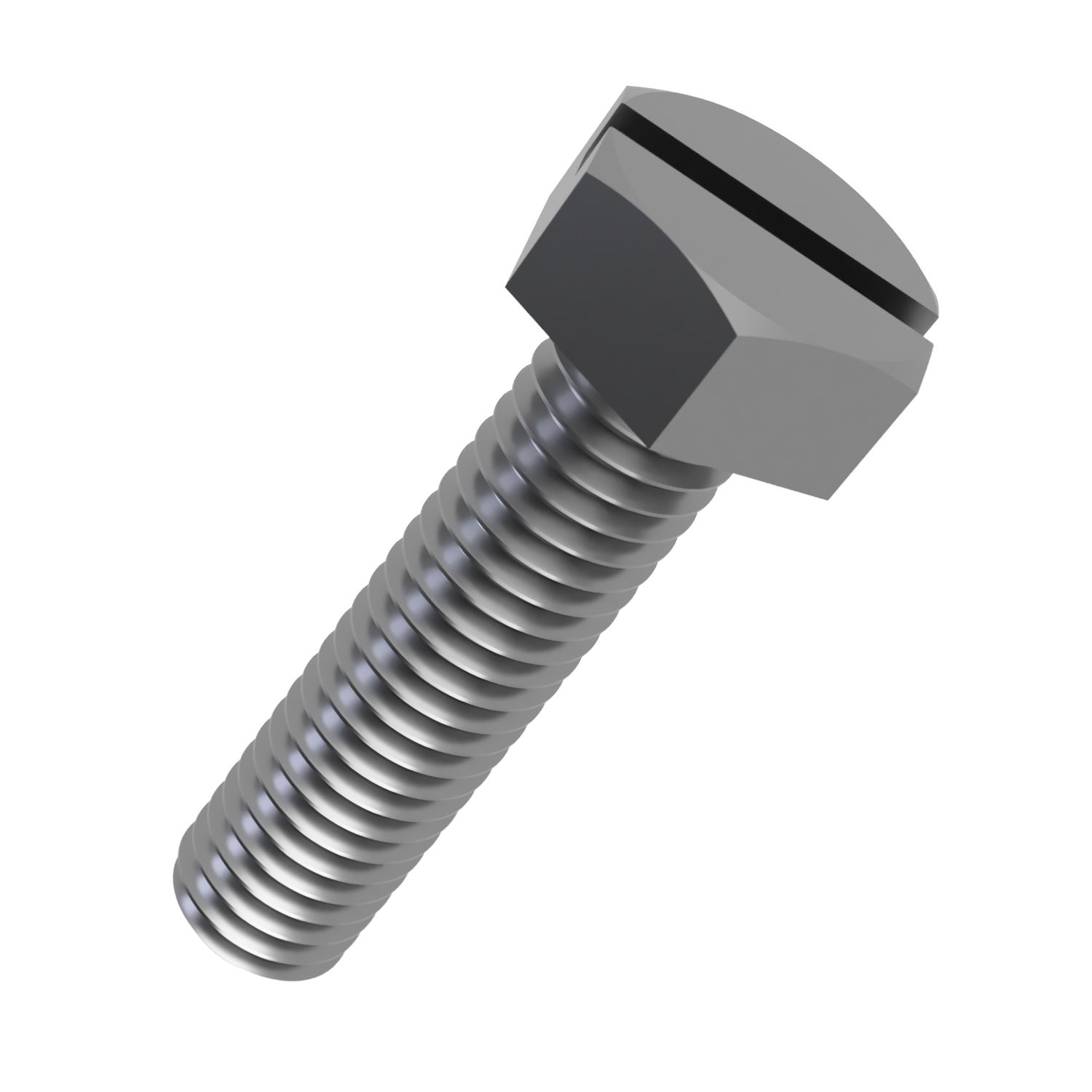
DIN 933SZ – Slotted Hex Head Bolts with Thread up to Head
DIN 933SZ bolts feature a hexagonal head with a slot and are fully threaded, offering versatility in installation methods. The combination of hex head and slot design provides users with flexibility in tool selection, allowing installation with either a wrench/socket or screwdriver depending on access constraints.
These hex bolt types are particularly useful in applications where space limitations might restrict access to standard wrenches, providing enhanced installation flexibility without compromising on strength or reliability.
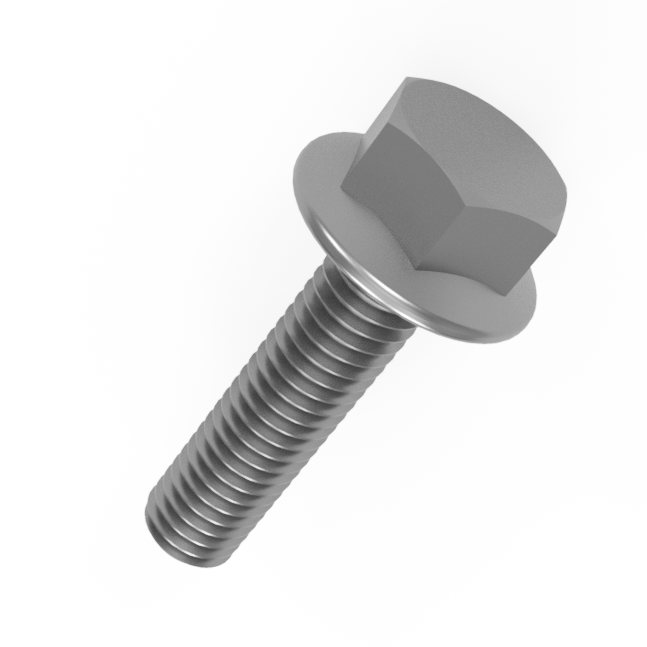
DIN 6921 - Flanged Hex Bolts
DIN 6921 flange bolts feature a hexagonal head with a circular flange to increase contact area and load distribution, making them ideal fastener types for applications requiring reduced bearing stress. The integrated flange eliminates the need for separate washers, reducing assembly time and part count.
These hexagonal bolts are particularly effective in thin materials or applications where the substrate might be damaged by concentrated loads, as the flange distributes clamping forces over a wider area.
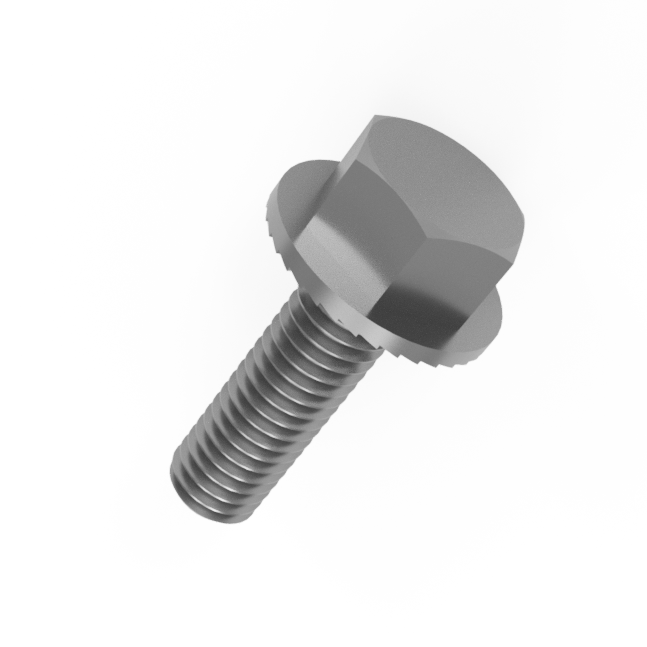
DIN 6921 - Serrated Flanged Hex Bolts
DIN 6921 Serrated Flanged Bolts feature a hexagonal head with a serrated circular flange to reduce loosening under vibration, essential for machinery applications. The serrated underside of the flange bites into the substrate material, creating additional resistance to rotation.
These hex head bolt types are indispensable in high-vibration environments such as automotive, aerospace, and industrial machinery where standard flanged bolts might work loose over time due to dynamic loading.
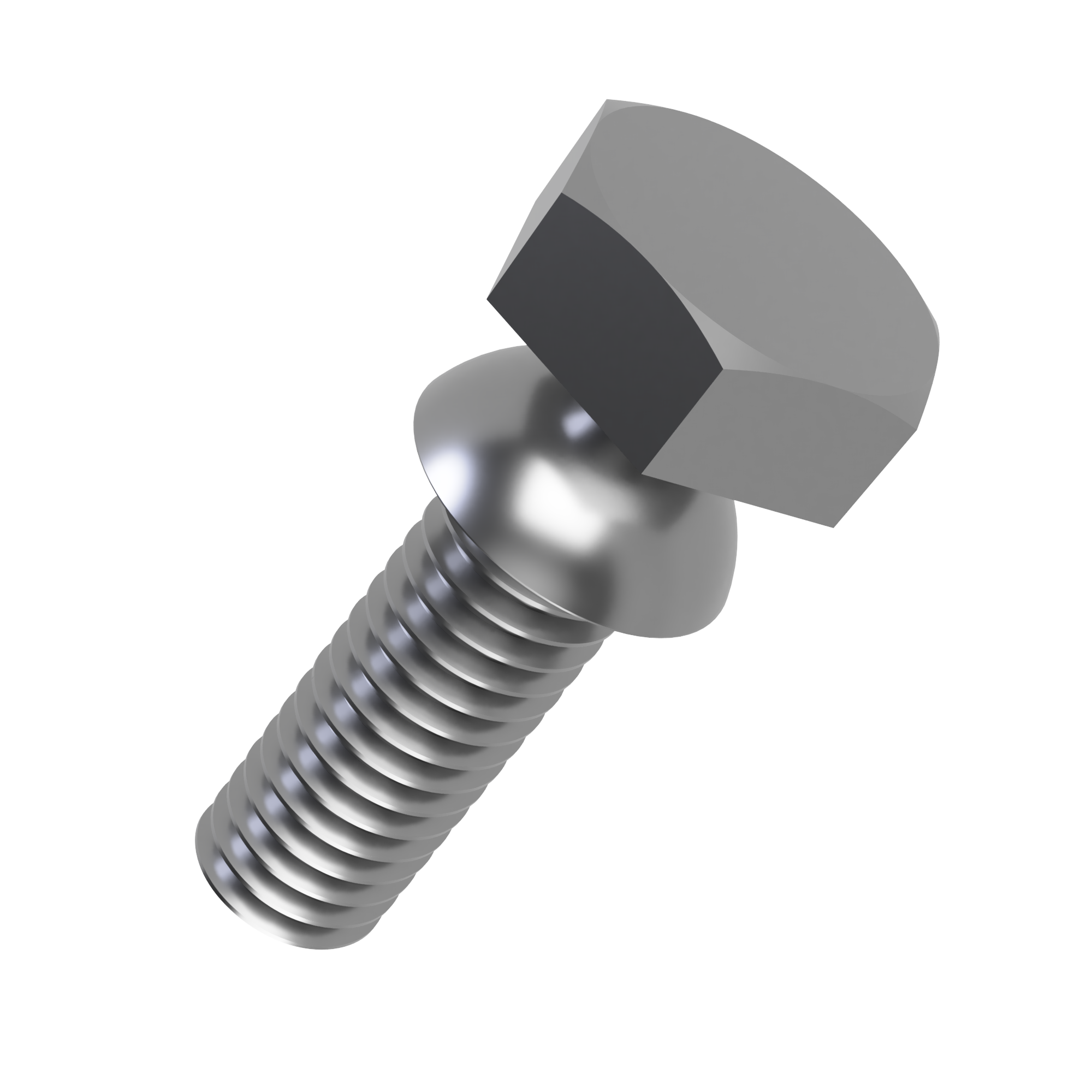
Hexagonal Shear Head Bolts
Featuring a fully threaded bolt and hexagonal head which is removed upon installation; leaving behind a smooth, tamper resistant domed head for security applications. These specialised fastener types are designed to break away at a predetermined torque, ensuring consistent installation whilst preventing unauthorised removal.
These security hex bolts are essential in public installations, street furniture, and any application where tamper resistance is required whilst maintaining a clean, professional appearance after installation.
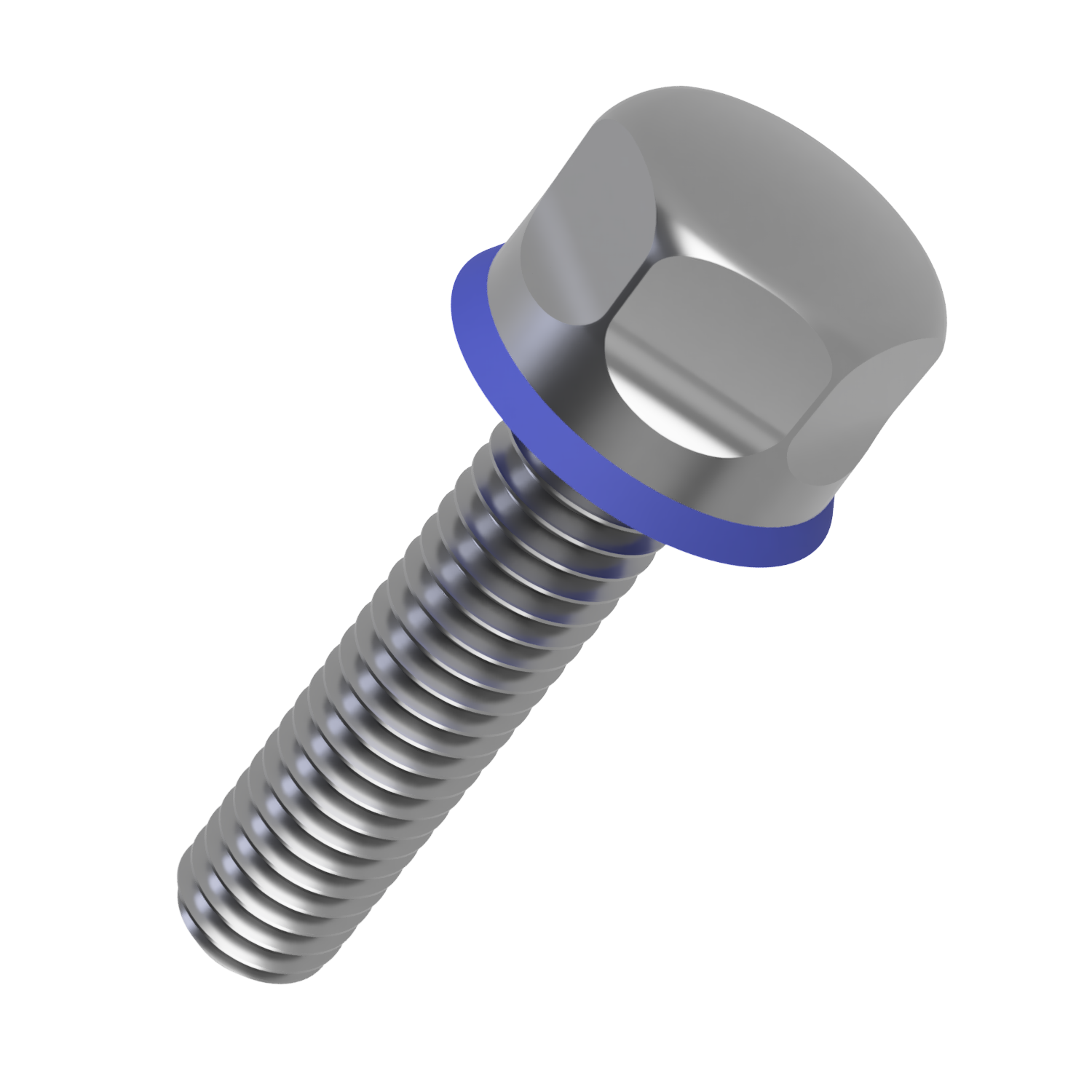
Hygienic Hex Head Screws
Featuring a fully threaded bolt and hexagonal head with an NBR/EPDM seal which prevents bacteria and water entering, perfect for food processing and pharmaceutical industries. These specialised hex head bolt types meet stringent hygiene standards whilst providing reliable fastening performance.
The integrated sealing system eliminates potential contamination points, making these hexagonal bolts essential in cleanroom environments, food production facilities, and medical equipment where sterility is paramount.
We also supply a range of specialist Hex Head Screws and Bolts for Industrial Purposes
We are proud to supply an impressive range of large hex bolts that are sized to cater to heavy duty industrial, commercial and construction applications.
These large hexagonal bolts are manufactured from the highest quality grades of stainless steel and are typically more difficult to source than those with smaller thread sizes. However, we have developed a resilient supply chain that offers a strong, steady supply and strive to ensure a prompt delivery, even for large and demanding order quantities to our customers located within the UK.
| Type | Description |
|---|---|
| DIN 931 – Hex Head Bolts with O-Ring | DIN 931 sealing bolts feature a standard hexagon head with a circular groove which contains an o-ring for sealing. These bolts are part threaded, featuring a plain shank. |
| DIN 571 – Hexagon Coach Screws | DIN 571 Coach Screws feature a standard hexagon head and are part threaded with a self tapping thread, featuring a plain shank. |
| DIN 961 - Fine Pitch Hexagon Bolts | DIN 961 Bolts feature a standard hexagon head and are fully threaded with metric fine pitch thread. |
| ISO 4014 - Hexagonal Head Bolt | ISO 4014 bolts are equivalent to DIN 931 bolts and feature a standard hexagon head and are part threaded, featuring a plain shank. |
| ISO 4017 - Hexagonal Head Screw | ISO 4017 bolts are equivalent to DIN 933 bolts and feature a standard hexagon head and are fully threaded. |
Click here to view our full range of Hex Head Bolts
What are the most frequently used finishes or coatings for Hex Head Bolt Types?
Fastener types can have a variety of coatings, and the application (where and how the fastener will be used) usually dictates which coating makes sense. Here are some of the most popular coatings and their best-use scenarios for hexagonal bolts:
Please note that there are many other types of coatings available depending on the specified application.
Hot Dip Galvanised:
Standard zinc plating is popular, but hot-dipped galvanised coatings provide a thicker layer of zinc on the fastener's surface, making this a better corrosion resistant coating for hex bolt types. Also referred to as HD, hot dip galvanised coatings are ideal for outdoor use, particularly coastal areas where the salt content is higher. HD-coated fasteners take a significantly longer time to corrode than those with other coatings.
Brass, Bronze, Chrome or Nickel-Plated:
Due to their visually appealing finish, these coatings are often used on hexagonal bolts that will be visible (think decorative work). Both brass and bronze are very resistant to corrosion. Chrome and nickel-plated finishes provide some level of corrosion resistance to the metal, but they are typically chosen for their aesthetic finish rather than for strength and protection.
Grey Phosphate:
Grey phosphate is another popular type of coating meant to lengthen fastener lifespan. Phosphate coatings reduce friction, making them great for hex head bolt types that need to be inserted. Phosphate coatings also improve corrosion resistance to a degree.
Stainless Steel:
While not a coating (stainless steel is a material), it is the best option for rust prevention because it is inherently corrosion resistant in many environments. That's why stainless steel is often used in marine, food and medical applications, as well as in products designed for outdoor use. We offer a full range of Stainless Steel Fasteners.
Clear and Yellow Zinc:
Zinc is one of the most popular fastener coatings available for hex bolts. This type of coating is relatively inexpensive to apply and protects against rust, making zinc-coated fasteners perfect for humid environments. Yellow zinc gets its name from its electro-plating process which can create a more golden colour than clear zinc coatings. Yellow zinc-coated fasteners are ideal for situations where the product is likely to come in contact with water or other liquids.
What are the standard thread types used on Hex Head Bolt Types?
Thread types are the patterns of ridges and grooves that run along the length of hexagonal bolts. They determine how the bolt interacts with the mating hole or nut, and affect the strength, durability, and ease of installation of the fastener. Understanding these thread specifications is crucial when selecting hex bolt types. There are many different thread types available for hex head bolts, but some of the most common are:
For detailed information about the differences between coarse and fine threads, please see our comprehensive guide on metric coarse and fine thread differences.
| Thread Type | Features | Applications |
|---|---|---|
| Metric Coarse |
|
Suitable for general-purpose applications, where high strength and resistance to vibration are not required. |
| Metric Fine |
|
Suitable for applications that require high strength, precision, and resistance to loosening due to vibration or thermal expansion. |
| BSP (British Standard Pipe) |
|
Suitable for use within plumbing and pipe fitting applications. BSP threads are used in the UK and most of the world, except North America. |
| UNF (Unified National Fine) |
|
Introduced during World War II to enable the interchangeability of machinery between the USA, Canada, and Britain. UNF threads are still widely used in engineering and automotive applications, especially in North America. |
| UNC (Unified National Coarse) |
|
UNC threads are still widely used in engineering and automotive applications, especially in North America. |
| NPT (National Pipe Thread) |
|
Suitable for use within plumbing and pipe fitting applications in North America. |
| BSW (British Standard Whitworth) |
|
BSW threads were first used in the industrial revolution and are still used in some engineering and automotive applications, especially in older machinery and vehicles. |
| BSF (British Standard Fine) |
|
BSF threads are still used in some engineering and automotive applications, especially in high-stress or high-precision situations. |
| BA (British Association) |
|
BA threads are still used in some industries such as metering equipment and optical equipment. |
These are some of the standard thread types used for hex head bolt types, but there are many more variations and specifications that can affect the performance and compatibility of the fastener. Therefore, it is important to check the requirements of your project before selecting a hexagonal bolt.
Frequently Asked Questions About Hex Head Bolt Types
What is the difference between a Bolt and a Set Screw?
Bolts and set screws are two types of fasteners that are commonly used in various applications. Although they may look similar, there are some key differences between these fastener types.
A Bolt is a type of fastener that has a partially threaded shank and a head that is usually hexagonal or square. Bolts are usually used to secure items in place, tightening and holding by use of a threaded nut and often a washer. The plain part of the shank varies in length; this makes the bolt slightly stronger than the set screw, as whenever a thread is cut onto a shank, a small amount of metal is removed by the process.
A Set Screw is a type of fastener that has a fully threaded shank. Set Screws are usually fully inserted into the receiving object and are commonly used to connect two objects together. They are usually used with wood, metal, and plastics. Set screws are also referred to as Hex Head Screws or Fully Threaded Bolts.
What do the numbers on the Hex Head Bolts mean?
Metric bolts made of 304 stainless steel are marked on the bolt head with A2. The A2 represents 304 stainless steel but can often be followed by another number which represents the tensile strength, for example A2-70. The tensile strength equals 700 MPa general-purpose stainless steel. The number after the A2 will vary depending on the tensile strength of the bolt.
Metric bolts made of 316 stainless steel are marked on the head of the bolt with A4. The A4 represents 316 stainless steel but can often be followed by another number which represents the tensile strength, for example A4-70. The tensile strength equals 700 MPa marine grade stainless steel. The number after the A4 will vary depending on the tensile strength of the bolt.
Common metric classes are 5.8 Low Carbon Steel, 8.8 Medium Carbon Steel, 10.9 Alloy Steel, and 12.9 Alloy Steel. The higher the numbers are, the stronger the material of the fastener is. The number that appears before the decimal, when multiplied by 100, will provide the approximate minimum tensile strength of the bolt. The number after the decimal, when multiplied by 10, will provide the approximate yield strength percentage in relation to the minimum tensile strength. These steels are often quenched and tempered.
How do I choose the right hex bolt type for my application?
Selecting the correct hex head bolt type depends on several critical factors. First, consider the load requirements - for heavy-duty applications requiring maximum strength, choose Grade 8 or 10.9 hex bolts. For general purposes, Grade 5 or 8.8 bolts provide excellent performance. Environmental conditions are equally important; marine or outdoor applications require stainless steel or hot-dip galvanised hex bolt types for corrosion resistance. Thread configuration matters too - fully threaded hexagonal bolts distribute load evenly and are ideal for through-holes, whilst partially threaded bolts offer greater shear strength for structural applications.
What's the difference between hex bolts and hex cap screws?
While often confused, hex bolts and hex cap screws are distinct fastener types with different applications. Hex bolts are designed to be used with nuts and typically have a plain underside to the head. They're commonly used in construction where dimensional tolerances are less critical. Hex cap screws, conversely, feature a washer face (bearing surface) under the head and a chamfered point. They're designed to thread into pre-tapped holes and are used in precision applications where tight tolerances are essential. Hex cap screws generally have better dimensional accuracy and surface finish compared to standard hex bolts.
Why won't my hex bolt tighten properly?
Several factors can prevent proper tightening of hex head bolt types. Cross-threading occurs when the bolt isn't aligned correctly with the nut or tapped hole - always start threading by hand to ensure proper engagement. Worn or damaged threads on either the bolt or mating component will prevent proper tightening. Using the wrong thread pitch (coarse vs fine) is another common issue. Material compatibility problems, such as different thermal expansion rates, can cause loosening. Finally, insufficient lubrication or corrosion can increase friction, making proper torque application difficult. Always ensure you're using the correct fastener type for your specific application and follow recommended torque specifications.
Got a question? Need some help?
Our friendly Product Support Team are here to help, so please just give us a call if we can assist you with sourcing standard and custom parts.
CALL USRelated posts
-
 Stainless Steel Equivalent GradesCompare stainless steel grades and find the perfect match for your next project.Read more
 -
 Stainless Steel Fasteners: Tightening and Breaking TorquesUnderstanding the Limits: How to Properly Tighten Stainless Steel Fasteners Without Compromising Strength or...Read more
 -
Leave a comment